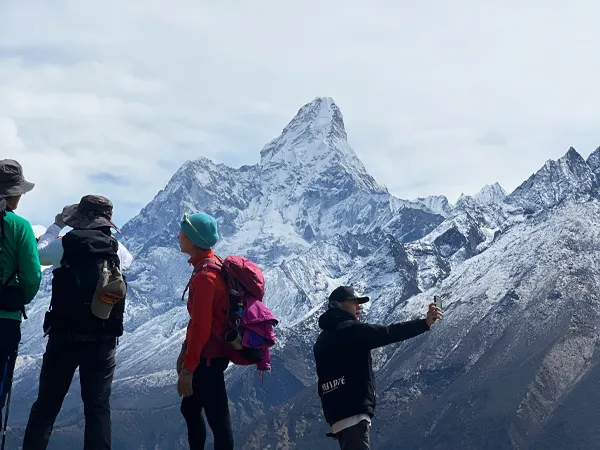
Everest Base Camp Trek for seniors with Helicopter Return is the shortest and comfortable version of Everest Trek with perfect acclimatization and altitude gain which guarantees a majestic trek in a flexible and relaxing way, suited for senior, adult and children and also for first-time trekkers in comfort and style.
Everest Base Camp Trek for Senior and Children with Helicopter Return is a comfortable way to hike to the base camp of Mount Everest. This program is specially designed for those trekkers who as physically low for long distance hike and are first time trekkers at such an altitude.
13-day seniors trek to Everest Base Camp provides trekkers with the opportunity of exploring the entire Everest Region both through land and by air. This trek focus on trekking one-way to the Everest Base Camp and fly-out via Helicopter the other way, skipping the same route descend all the way back to Kathmandu.
This saves time and also one will get ample duration to explore the highlighted part of the Everest Region in comfort and style, providing sufficient period to acclimatize the body, that guarantee trekkers to step at the base camp. Thus, Discover Altitude Treks has crafted this special program targeting the trekkers who are bit cautious about health but desperate to explore the high altitude Everest Base Camp.
Crafted with Acclimatized Itinerary
Everest Base Camp Trek for Senior and Children is a 13 days program starting from Kathmandu and ending in Kathmandu. This is a slow trek that covers the distance in a perfect way and the altitude gain is maintained properly, making sure that senior citizen, children or the first time trekkers to Everest Base Camp can accomplish the trek in a more relaxing way.
Everest Base Camp Trek for Senior and Children with Helicopter Return is a perfect program of 13- Days Everest Base Camp that can be done in a comfortable and more convenient way without any difficulty.
This 13-day EBC Trek is a one way trek and other way helicopter return after stepping the Base Camp of Mount Everest. This will save sufficient number of days that are needed to descend after the Base Camp Summit. The expedition of 13 Days Everest Base Camp Trek not only focuses the Everest Base Camp, but also covers the other highlighted part with the majestic village tour and the pilgrimage sites of the Buddhist. This will help trekkers to understand the lifestyle, tradition and culture of the residing Sherpa community and experience their hospitality.
Following the 13-Days Everest Base Camp Trek increases the chance of reaching the base camp of Mount Everest in a relaxing and comfortable way. This will be a special boon for those who want to maintain the trekking distance and the altitude gain, and trek comfortably.
Everest Base Camp Trek has always remained bucket list for many travellers due to its majestic trail and panoramic vista. The trail to Everest Base Camp is not only about exploring the Himalayan vista and stepping at the base of Mount Everest, it is the once in a life-time journey that will create a memory.
Everest Base Camp Trek has everything that trekkers would love to see, every hike will mesmerize travellers with its amazing wonder. Everest Trek provides the best of diverse Himalayan vegetation, flora and fauna. Trekkers will be able to feel the purity of the nature and hike through the Himalayan woods.
Moreover, Everest Base Camp Trek will take travellers to the land of Sherpa, an ethnic community who dwells at such a high altitude. Sherpa’s’ are the backbone of the Himalayas and the Everest Region is regarded as the homeland and the area where the largest number of Sherpa community lives.
Trekking to Everest Base Camp is a strenuous hike due to its harsh trail and high altitude. Trekkers normally suffer from altitude related problem due to the decline of oxygen when the trek crosses 3500 Meters. Trekking to Everest Base Camp needs to cover 5000+ Meters. This high altitude results the thin layer of oxygen, here the higher the altitude the thinner the oxygen level goes.
Thus, to make the Everest Base Camp a comfortable and easy-going hike that maintains both the distance and the altitude, Everest Base Camp Trek in 13-Days with Helicopter Return will be a perfectly designed program for any age group. This itinerary of 13-Days guarantees one to accomplish their dream of stepping at the base camp of Mount Everest without any difficulty.
Trip Highlights:
The itinerary of Everest Base Camp Trek for seniors and children is perfectly designed to make sure the hike to Everest Base Camp goes in a perfect way without any difficulty. The trek distance and the altitude gain are well customized with an average of 3/4 hours of hike every day with frequent break.
Every day, trekkers will have an opportunity of extra acclimatization, side hike and an opportunity to explore the local villages and conduct some side trip on the trail. Trekkers following the senior citizen program for the Everest Base Camp hike will have an advantage to stay in a peaceful environment, explore the nature, Himalayas and the local hospitality of the Sherpa.
During your trek to Everest Base Camp, one will have an ample opportunity to explore the local Sherpa villages, monastery and participate in the morning and evening ceremony of the monastery performed by the monks. Further, one will have sufficient time to explore the local life, tradition and custom of the Sherpa community.
- Private rooms throughout the trip
- Mini luxury accommodation in Everest (attached till dingboche)
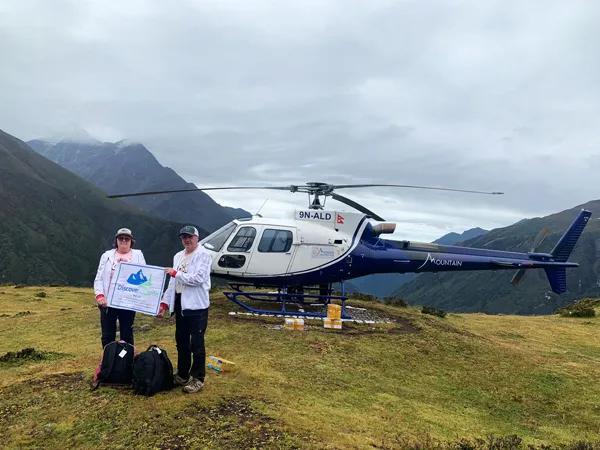
- Helicopter return from Gorakshep: no need to trek back same way down to Lukla and wait long for the flight
- All inclusive package (full board)
- Hassle free trekking experience
- Dedicated assistance guide for group of 6 or more clients
- 100 % success rate, based on our past senior trekking clients
- First company to design and operate a dedicated Everest Base Camp Trek for senior travellers
Everest Base Camp Trek for seniors with Helicopter Return Itinerary
Day 1 Flight to Lukla (2840m / 9318 Feet) and Trek to Phakding (2610m / 8563 feet)
The first day of your trek starts with a short and exciting flight to Lukla. As you land you will get time to refresh yourself and be prepared for your first day hike to Phakding. This will be an easy hike through the villages and farmland with ascent and descend; however, the overnight stay will be at low altitude than Lukla
Max Altitude: 2,610m (8,562ft)
Altitude Loss: Approx. 230 m / 755 Feet
Duration: Approx. 3 hours
Distance: Approx. 8 km
Meals: Full Course (BLD)
Accommodation: Lodge
Mode of Transportation: Flight
Day 2 Trek to Monjo (2,835 m / 9,301 feet)
The second day of your hike starts after breakfast. This will be a short and majestic hike through the rhododendron forest and cascading river. Your hike continues towards the north of Phakding to a popular small village Monjo at an altitude of 2835 Meters. After, check-in, you can rest for a while and then explore the village and enjoy the pristine location.
Max Altitude: 2,835m (9,301ft)
Altitude Gain: Approx. 225m / 738 feet
Duration: Approx. 3/4 hours
Distance: Approx. 6 km
Meals: Full Course (BLD)
Accommodation: Comfort Lodge
Day 3 Trek to Namche Bazaar - 3,440 metres (11,286 ft)
Today will be a majestic uphill hike through dense rodhodendron forest with majestic views of snow-covered Himalayas. A short distance hike from Monjo will take you to Jorsalle village and then the hike continues to Namche bazaar with frequent stop to take picturesque view of the Himalayas.
Max Altitude: 3,440m (11,286ft)
Altitude Gain: Approx. 611 m / 2,005 feet
Duration: Approx. 4/5 hours
Distance: Approx . 7.5 km
Meals: Full Course (BLD)
Accommodation: Comfort Lodge
Day 4 Acclimatization Day, Day Hike to Everest View Hotel (3880m / 12,730 feet)
Today will be our acclimatization day and this day we will spend exploring this famous and popular town of the entire Khumbu region. After breakfast, we will hike towards Everest View Hotel (3880M) to a hill station that will bless us with majestic panoramic views of the Himalayas, including Mount Everest.
Then, we will spend quality time exploring Namche Bazaar and visiting monastery and gompa or a bar or pool house. There are numerous activities one can do in Namche Bazaar.
Max Altitude: 3,440m (11,286ft)
Altitude Gain: Approx. 440 meters
Duration: Approx. 3 hours
Distance: Approx. 5 km
Meals: Full Course (BLD)
Accommodation: Comfort Lodge
Day 5 Trek to Pungi Thenga (3,250 m / 1067 feet)
Farewell to Namche Bazaar, your hike continues uphill with scenic view of the Namche Bazaar and the surrounding landscape. Hike continues through the pine forest and then you will reach Pungi Thenga, a small Sherpa village which is located in a peaceful environment and provides towering mountain views and the soothing sound of Dodh Koshi river.
Max Altitude: 3,250m (10,662ft)
Altitude Loss: Approx. 196m / 643 feet
Duration: Approx. 3/4 hours
Distance: Approx. 5.5 km
Meals: Full Course (BLD)
Accommodation: Comfort Lodge
Day 6 Trek to Tengboche - 3,867 meters (12,687 feet)
Tengboche, a small Sherpa village is one of the popular destinations in the Everest Region. Blessed with the largest monastery in the entire Khumbu Region, Tengbuche Monastery is one of the best to explore.
Your hike from Pungi Thenga will be short and easy, as we are already at the high altitude. This will be a pleasant and relaxing hike through the pine forest to reach Tengbuche.
Max Altitude: 3,867m (12,687ft)
Altitude Gain: Approx. 610 m / 2001 feet
Duration: Approx. 3/4 hours
Distance: Approx. 4/5 km
Meals: Full Course (BLD)
Accommodation: Comfort Lodge
Day 7 Trek to Pangbuche - 3,985 meters (13,074 feet)
Max Altitude: 3,985m (13,074ft)
Altitude Gain: Approx. 125 m / 410 Feet
Duration: Approx. 3/4 hours
Distance: Approx. 5/6 km
Meals: Full Course (BLD)
Accommodation: Comfort Lodge
Day 8 Trek to Dingbuche - 4,410 m (14,470 feet)
From today, we will be crossing the 4000+ meters landmark. This zone ahead is regarded as a danger zone for altitude sickness when trekkers from the lower altitude avoid acclimatization rules.
As our trek has been slow, we will feel comfortable, however, we will make sure we are well hydrate and slow with our hike.
Max Altitude: 4,410m (14,468ft)
Altitude Gain: Approx. 425 m / 1,394 Feet
Duration: Approx. 2/3 hours
Distance: Approx. 6/7 km
Meals: Full Course (BLD)
Accommodation: Comfort Lodge
Day 9 Acclimatization day in Dingboche
This will be our last full acclimatization day. We will spend quality time hiking nearby hill Nagtsang and will try to reach the landmark of 5000 Meters or somewhat nearby. This will help our body to cope with such an environment and then we will descend towards Digbuche. This day hike will benefit us in the coming days
Max Altitude: 4,410m (14,468ft)
Meals: Full Course (BLD)
Accommodation: Comfort Lodge
Day 10 Trekking to Thukla - 4,620m (15,157 feet)
Our day starts after breakfast in a more comfortable way towards Tukla. Hike mainly continues through the uphill climb with scenic view to reach Thukla, a small village where trekkers stop for lunch.
This will be a short and easy hike, exploring 100+ memorials as a remembrance for the climbers who lost their life during the Everest expedition.
Max Altitude: 4,620m (15,157ft)
Altitude Gain: Approx. 210 m / 688 feet
Duration: Approx. 2/3 hours
Distance: Approx. 5.5 km
Meals: Full Course (BLD)
Accommodation: Comfort Lodge
Day 11 Trek to Lobuche - 4,940 m ( 16, 207 feet)
Lobuche, a scenic small village is a short hiking distance from Tukla. However, due to altitude, we will hike at a nominal pace, stopping frequently for drink and relax. The hike will provide panoramic view of the Lobuche Peak and other surrounding mountains and the forest at distance.
Max Altitude: 4,940m (16,207ft)
Altitude Gain: Approx. 320 m (1,050 feet)
Duration: Approx. 2/3 hours
Distance: Approx. 6 km
Meals: Full Course (BLD)
Accommodation: Comfort Lodge
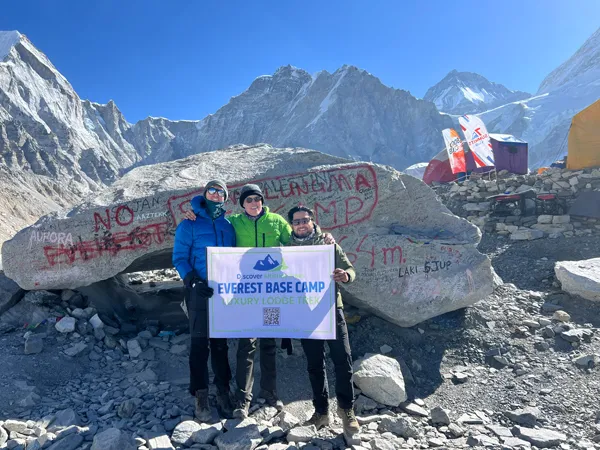
Day 12 Gorakshep (5,140 m/ 16864 feet) and Day Tour to Everest Base Camp (5,364 m / 17,598 feet)
Gorakshpe is the highest and the last village in the entire Everest Region. This will be one of the great moment for us and the most awaited day. Today will also be our longest hiking day and the energy which we had reserved for the last 11 days will be used here as an assest.
As we hike higher, there will be few options for us to shorten our camp. From Lobuche the only settlement place will be Gorakshpe. Today, we will starts bit early compared to other days and then will make a trek to Gorakshpe. After check in at our tea house and Lunch, we will make a day tour to Everest Base Camp.
Exploring the majestic view and taking some photos and videos, we will hike back to Gorakshep to end our trek.
Max Altitude: 5,364m (17,598ft)
Altitude Gain: Approx. 200 m (656 Feet)
Duration: Approx. 7 hours
Distance: Approx. 11 km
Meals: Full Course (BLD)
Accommodation: Comfort Lodge
Day 13 Helicopter flight back to Kathmandu
This will be the last morning/day for us in the Everest Region. However, trekkers will have an alternative option to explore Kalapatthar (5,545 meters), a view point where trekkers hike early in the morning to experience the first rays of sunlight upon the Himalayas, including Mount Everest.
If you want to experience this adventure, you can start early morning towards Kalapatthar. After breakfast, Helicopter will be there for pick up and then you will fly towards Kathmandu with frequent stop at some of the place like Everest View Hotel, Lukla etc.
Max Altitude: 1,350m (4,429ft)
Duration: Approx. 2 hours
Meals: Breakfast
Mode of Transportation: Helicopter flight
Are you still confuse from where to start?
No worries - Our Team is ready to guide you!
Route Map & Altitude Chart
Add-ons
3 Star Hotel Accommodation in Kathmandu
US$75
per night
5-Star Hotel Accommodation in Kathmandu
US$205
per night
Luxury Heritage Hotels in Kathmandu
US$649
per night
Extra Porter Service
US$30
per porter / per day
Kathmandu to Lukla by Helicopter
US$600
per person
Upgrade Your Lodge on the Everest Route
US$450
per night
Wildlife Safari in Chitwan - 2 night 3 days
US$350
per person
Private Trip

Make it a private tour
Looking for a private tour, select your flexible date and trip of your interest, consult with our expert, and leave the rest to us to make a memorable experience.
Start HereEquipment List
Along with physical, mental, and document preparation, you also have to pay attention to trekking gear and essentials you pack for the journey. Carrying the right gear is important for a safe and pleasant trekking experience.
We have shared everything you will need for the Everest Base Camp trek below. If your itinerary includes city tours, definitely pack a few pairs of casual clothes along with comfortable hiking shoes.
Similarly, swimsuits and gym wear are a couple of other things that you can pack just in case you get a chance to use a swimming pool, hot spring, or gym in your hotels.
Additional items for winter trekking
December to February is the coldest time of the year in the Himalayas. In most trekking regions, upper routes see heavy snowfall. The temperature drops significantly. To trek comfortably in winter, you have to add the following things to your trekking kit:
- Heavier/warm thermal base-layer top (1)
- Thermal base-layer bottom (1–2)
- Extra fleece/warm mid-layer (1)
- Insulated/down trekking pants (1 pair)
- Heavyweight/waterproof winter gloves or mittens (1 pair)
- Glove liners (1 pair)
- Balaclava (1)
- Neck warmer (1)
- Gaiters (1 pair)
- Microspikes/traction cleats (1 pair, depending on route and conditions)
- Hand warmers (1–2 packs)
- Foot warmers (1–2 packs, optional)
- Hot-water bottle (1)
- Warmer-rated sleeping bag (1, if your existing bag is insufficient for the cold weather)
- Sleeping mat with suitable insulation (1, for camping treks)
- Ski/snow goggles (1, for snowy/high-altitude routes)
- Extra batteries/power bank protection for cold conditions (as needed)
- Warm pajamas (1-2 pairs, optional)
- Extra moisturizer (the dry air can cause cracked skin)
Additional items for summer/monsoon trekking
June to August is the summer/monsoon period in Nepal. Heavy rainfall usually starts around mid-July and can last till late August. In September, there is occasional rainfall till the second/third week of the month.
To trek during the rainy season, you need extra gear to protect yourself and your stuff from getting wet. You'll also need rain gear to walk safely on muddy/slippery trails.
- Lightweight rain poncho (1)
- Rain pants (1 pair)
- Waterproof backpack liner (1)
- Extra dry bags (1–2)
- Waterproof phone pouch (1)
- Quick-drying extra T-shirt (1–2)
- Extra quick-drying trekking socks (3-4 pairs)
- Gaiters (1 pair)
- Anti-leech socks (2-3 pairs, for routes where leeches are common)
- Small umbrella (1, optional)
- Laundry soap/sheets (1 small pack)
- Lightweight clothesline (1)
- Extra zip-lock/waterproof bags (several)
- Small microfiber cloth for drying wet gear (1)]
- Anti-fungal foot powder (optional)
Helpful packing tips for the trek in Nepal
Smart, accurate packing is important for the trek. We have already shared all the things that you will need while trekking in Nepal. Below, we have shared packing tips that will make a huge difference to your trek experience:
➤ Buying and renting trekking gear in Kathmandu: Kathmandu is where the majority of travelers arrive for trekking in Nepal. In Kathmandu, you can find all trekking essentials at the best rate and best quality. Rental service is also available for trekking gear. You can get sleeping bags, daypacks, trekking poles, down jackets, and many more at a very reasonable price.
➤ Pack according to your trek: A short, comparatively low-altitude trek requires fewer things than advanced, high-altitude treks. So, tweak your gear kit depending on the trek route you have picked. We will help you with it.
➤ Layer clothes: In the mountains, wear clothes in layers, starting from a comfortable base layer, fleece, down jacket, and windproof outer layer. By layering clothes, you can adjust as per changing mountain temperatures.
➤ Broken-in trekking shoes: You do not understand how big a difference there is between a brand-new pair of trekking shoes and already broken-in trekking shoes. Please make sure you are already used to your trekking boots. Buy them early and wear them before the trek begins.
➤ Keep your luggage light: Do not pack unnecessary things. You have a 9 kg weight limit for the duffel bag and 5 kg for the daypack. So, definitely choose everything carefully. At the same time, pack a couple of extra pairs of socks, t-shirts, and undergarments.
➤ Keep your essentials in your daypack: The daypack is carried by the trekkers. Pack your documents, money, water bottle, snacks, SPF, first aid kit, camera, sunglasses, and other things that you may need while walking in the daypack.
➤ Take sun protection seriously: The higher you ascend, the stronger the sun's rays will become. If you want to avoid tanning and sunburns, we recommend using good SPF and reapplying it throughout the day on all exposed body parts.
➤ Dry skin: The higher you ascend, the colder and drier the climate gets. Your skin will suffer. So, get a nice moisturizer and use it regularly.
➤ Keep electronics protected: Keep your phones, camera, spare batteries, cables, chargers, etc, in a waterproof pouch.
➤ Toiletries: Pack travel-size toiletries including basics like toilet paper, soap, toothbrush, toothpaste, comb, shampoo, etc. It is best not to rely on the houses for these things.
➤ Keep some emergency funds aside: You never know what additional expenses you may come across. So, make sure to have some additional funds for emergencies.
➤ Use packing cubes: To organize your duffel bags and daypacks, use packing cubes. It will be easier to pack and find things.
➤ Daypack: Make sure your daypack has a nice waist support band.
General
- Sunglasses (Category 3 or 4 UV protection)
- Lip balm with SPF
- Sunscreen SPF 50+ (carry ample sunscreen and reapply on every exposed body part to avoid tanning and sunburns) (Spray SPF is great for reapplication)
- Insect repellent
- Smartphone
- Camera
- Extra camera battery
- Memory cards
- Power bank (20,000–30,000 mAh recommended)
- Charging cables
- Universal travel adapter
- Electrolytes
Upper Body Layers
- Comfortable underwear (6-8 pairs, depending on your trek itinerary)
- Short-sleeved shirts/t-shirts (3-4 pairs)
- Long-sleeve shirts (2-3)
- Thermal layer/fleece (merino wool or synthetic) (1-2 pairs)
- Down jacket (1)
- Windproof/waterproof jacket and pants (1)
- Comfortable casual wear for city (1-2 sets)
Lower Body Layers
- Trekking pants (2-3 pairs)
- Synthetic insulated pants (1-2 pairs)
- Lightweight hiking shorts (2 pairs)
- Comfortable pants for lounging (1-2 pairs)
Footwear & Accessories
- Trekking socks (4-5 pairs)
- Thick wool socks (2-3 pairs)
- Trekking boots (good ankle support and well broken-in)
- Camp shoes (Crocs, slippers, or lightweight sneakers)
- Duffel bag (60-80L waterproof duffel)
- Daypack (25-35L, comfortable waist belt, and rain cover)
- Dry bags (to store sleeping gear, electronics, used clothes, etc)
- Sleeping bag (As per season)
- Sleeping bag liner
- Inflatable pillow (optional)
- Eye mask
- Ear plugs
- Trekking poles (highly recommended)
- Headlamp with extra batteries
- Water bottles (2 x 1 liter)
- Insulated bottle cover
- Hydration bladder (highly recommended)
- Water purification tablets or a portable water filter
Head & Sun Protection
- Warm beanie (2 pairs - separate walking and sleeping beanie)
- Sun hat or wide-brim hat (1)
- Buff or neck gaiter (1-2)
- Balaclava (winter recommended)
Personal & Medical Kits
- Thermometer
- Eye drops
- Pain relievers
- Anti-diarrheal medication
- Motion sickness tablets
- Cold and flu medicine
- Oral rehydration salts (ORS)
- Bandages
- Antiseptic cream
- Blister pads
- Altitude sickness medication (consult your doctor)
- Medical tape
- Gauze
- Tweezers
- Small scissors
- Personal prescription medicines
Travel Documents
- Passport (valid for at least six months)
- Passport-size photographs (2–4 copies)
- Nepal tourist visa (for international travelers)
- International flight tickets
- Travel insurance documents
- Emergency contact information
- Photocopies of the passport and visa
- Digital copies of important documents stored securely on your phone or cloud storage
- Nepalese Rupees in small denominations
- Credit/debit cards
- Necessary permits to enter tourist sites (arranged by the Company)
Miscellaneous
- Garbage Bag
- Snacks (energy bar, trail mix, chocolate, nuts, dried fruits, protein bars, electrolyte tablets, instant coffee/tea bags, instant noodles, cookies, etc)
- Headphones
- Solar charger (optional)
- Compression socks (highly recommended)
- Lightweight blanket
- Travel mug
- Emergency whistle
- Binoculars (optional)
- Travel pillow
- Kindle or book
- Journal and pen
- Playing cards
- Spare shoelaces
- Safety pins
Useful Information
Guide to senior and children for Everest base camp trek
If you are senior and want to trek Everest Base Camp with children or solo then there are couple of important factor that one need to acknowledge before booking a trip. Always make sure that you are to summit Everest Base Camp in a first attempt, never plan for the second try.
Make sure your itinerary is flexible and you can change the itinerary even during the trek at the last hour and for this always avoid joining a group with unknown travellers.
Below are some of the Key Factors that Senior and Children must note before booking a trip to Everest Base Camp.
Ascent Slow and Keep extra acclimatization days
- The key antidote for Everest Base Camp Trek is ascent slow and always makes sure you have acclimatization days or reserve day to use when needed. The basic regular Everest Base Camp Trek is 12-DAYS, however, this is not a recommended itinerary for senior citizen and children. Instead, customize your itinerary and make it go in a slow ascent and complete the entire Everest Base Camp Trek in 16-19 Days. However, if you want to avoid the same way descend then you can follow the 13-Day customize Program.
Keep Shorter daily hike distance
- Regular itinerary for Everest Base Camp Trek follows a 6/8 hours of hike every day. However, for senior and children, this must be limited to 3/5 hours of every day hike. This will help you body acclimatize and hydrate with the altitude and your short daily hike will refresh your stamina and reserve your energy and also protect you knee.
Hike higher and sleep lower
When your distance covered and altitude gain is lower than you will get sufficient time to maintain your own pace and you will reach your overnight came early. This will allow you to explore the nearby side trip location.
Trekkers can hike to higher altitude during the day break, pushing your body to work at low-oxygen environment for adaptation. This will help your body to adjust and then descend at the low altitude (camp) for overnight stay. This changes will allow you to get sound sleep and your body will adjust easily.
Go with a Professional Guide and a Porter
Senior and children always have to make sure they are with a professional guide who is well trained with the high mountain environment and know the terrain of the Everest Region. Professional guide are always trained with the symptoms related to altitude sickness and they can easily handle. They are trained about basic medicine and the treatment to follow at such an altitude. Thus, they are a guide and also doctor to whom you can trust.
Apart from professional guide, always make sure you have a porter with you, who will assist you in carrying you back packs. The lighter you are, the easy you will feel while trekking. So, allow you porter to carry all you stuff and only keep a small day bag with you where you can put you water bottle, passport and cash.
Select a premium tea house
Everest Base Camp is now a premium trekking trail, where trekkers will have option to choose when it comes to accommodation. There are luxury lodges and basic tea house together and trekkers can choose as per their interest and budget.
However, the best part is even in basic tea house, one will have option to select premium room to accommodate. Some rooms are attach with bathroom and also provides heated blanket to keep warm. However, this is limited but in most of the places one can find this option. So if you are senior citizen or children, it is better to go with the option of attach room at the tea house and to have heated blanket to keep yourself warm to avoid chilling night temperature.
WHAT ONE CAN EXPECT FROM THIS TRIP
Everest Base Camp Trek for seniors and children with helicopter return is a comfortable, all inclusive package and covers all your trip cost. This will be a cosy trek in a comfortable and easy-going way.
The program has been designed in a perfect way that guarantees the success of the trek and further, one will have ample time to explore the side trip location during the trek. This trek covers everything and you can descend via Helicopter to avoid the same route descend.
WHEN IS THE BEST TIME TO TREK EVEREST BASE CAMP FOR SENIOR AND CHILDREN
Everest Base Camp Trek can be done throughout the year, however, it is better to avoid the monsoon season due to poor visibility of the Himalayas and also the possibility of the flight delays and even cancellation.
The best time for Everest Base Camp Trek for Senior and Children will be from February till June and October and November. However, December and January will be the perfect time if one wants to avoid crowd but those two months are winter in Nepal and the temperature during the hike will go below 0 degree Celsius. The best part of trekking Everest Base Camp in winter is the fascinating Himalayan vista and fewer crowds. So, if the chilling temperature will not be a problem then winter can also be an option where trails and tea house are less crowded.
WHAT SENIOR CITIZEN AND CHILDREN CAN EXPECT IN THIS ITIENARY
The Everest Base Camp Trek for senior and children with helicopter return has been designed in a perfect way to make sure the trek goes in a pristine environment, with nominal pace, perfect distance and altitude gain that one has to cover every day.
Trekkers with this itinerary will have sufficient time to explore the Everest Region and the villages and vegetation that exist within the trail and also some popular side trip during the trek. You will be staying in a peaceful environment enjoying the local hospitality.
The trek cost of Everest Base Camp for senior and children with helicopter covers all you expenses including meals and the best part is you will enjoy a majestic helicopter ride from Gorakshep back to Kathmandu.
Helicopter ride back to Kathmandu will save numbers of days require descending back to Lukla and this short helicopter ride will deduce the same ways descend.
HOW FIT ONE NEED TO BE TO FOLLOW THIS ITIENARY
Everest Base Camp Trek for Senior and Children with Helicopter Return has been designed for those who are basic hikers and never been to such an altitude. This program is one of the slowest itineraries that keep a short distance of hike everyday and the altitude gain has been maintained in a perfect way, helping trekkers to auto-acclimatize while hiking.
However, we expect any trekkers to be physically fit and can hike at a slow pace for couple of hours. Every day trekkers will need to hike 3/4 hours with frequent breaks. So a basic hikers who can continue for multi day task of hiking are fit for Everest Base Camp Trek.
HOW DIFFICULT WILL THIS TREK BE
Everest Base Camp Trek for Senior and Children with Helicopter Return will be a majestic hike with stunning view that follows the flexible itinerary in a relaxing and comfortable way. The trail to Everest Base Camp is an inclined hike with ascending and descending. However, the most part will be ascent.
Here, the trek will be to the high altitude so there will be an altitude gain, starting your hike from the altitude of 2840 Meter at LUKLA to 5364 at Everest Base Camp. The best part is Everest Base Camp will be a day hike from Gorakshap (5140M), the last overnight camp and also the highest overnight stay.
This hike from 2840 Meters to 5140 Meters will be made in 12 DAYS, providing sufficient time to acclimatize and also to explore the Everest Region. If you follow the regular program this is just a 8 Day to Everest Base Camp.
When the distance cover is short and you are having a relaxing short hike every day, then this will be a moderate trek.
WHAT WILL THE ACCOMMODATION AND FOOD BE LIKE
Accommodation during the Everest Base Camp Trek for Senior with Helicopter Return will be in a tea house / lodge. Those are the popular accommodation spot during the Everest Trek. Trekkers will be staying comfortably in a warm room, furnished with mattress, pillow, blankets etc.
Further, you will always have an option of food choice from the menu at the tea house / lodge. Foods vary in different forms and are fresh and well-cooked by profession local chef.