Everest Base Camp Trek in a 14 DAYS is a classical travel plan which covers the entire Nepal Trip in ONE FRAME, showcasing panoramic Himalayan vista and Sherpa culture. Schedule with international arrival and departure, this itinerary is designed with proper acclimatization, comfortable day to day distance that guarantee in high success rate to reach at the base camp of Mount Everest.
Everest Base Camp Trek, famously known as the EBC Trek, is one of the most incredible trekking journeys to the base of the world's highest mountain at 5,364 meters (17,598 feet).
This 14-day Everest Base Camp Trek leads to the base of Mt. Everest, also known as ‘Sagarmatha’ in Nepali and ‘Chomolungma’ in Tibetan. It is well-known among trekkers as one of the most adventurous trekking destinations.
Trekking to Everest Base Camp is not a mere hike; it is a journey to the highest base camp on earth with the majestic view of the Himalayan vista, diverse Himalayan vegetation, majestic landscape, and the Sherpa culture, customs, and tradition.
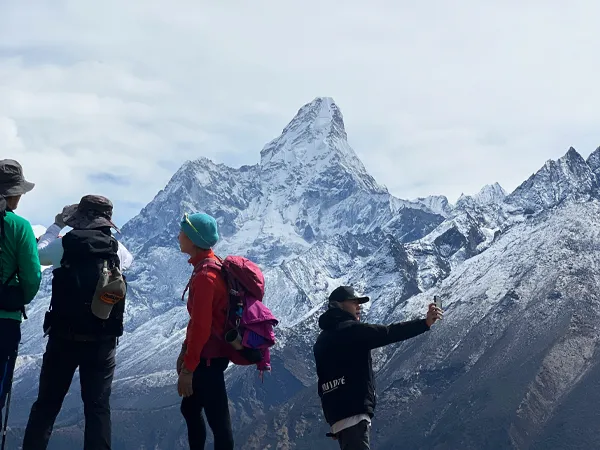
Travelling to Nepal for Everest Base Camp will lead you to a diversity of nature and culture, and is a once-in-a-lifetime experience with the enchanting view of Thamserku 6,623 meters (21,729 feet), Ama Dablam 6,812 meters (22,349 feet), Lhotse 7,600 meters (24,934 feet), and, of course, Mt. Everest 8848.86 meters (29,032 feet).
Apart from all this, the culture and lifestyle of the Sherpa people are of great interest. Sherpas are the only human inhabitants of the communities of the Himalayas. Their culture and welcoming hospitality will be one of the musts for experiencing things while in the Himalayas.
The entire high Himalayan region, which includes the Everest Region, is one of the oldest settlements of the Sherpa people, who are also known as the people of the Himalayas.
Their age-old, unique lifestyle, culture, religion, and always welcoming gesture will make you visit this region again and again.
Moreover, the Sagarmatha National Park, a UNESCO-listed site, is a protected zone of this region and is an asset for the people by protecting flora and fauna.
The Everest region is an important abode for different wild animals and birds, which are found at high altitudes, making them rare living creatures.
The magnificent view from Kala Patthar, 5,545 meters (18,192 feet), is the best place to observe the Himalayan range, which will make you feel like you are in paradise, and the sunrise view of the Himalayas is a breathtaking experience.
Thanks to Tenzing Norgay Sherpa and Sir Edmund Hillary for their journey to the summit in 1953 AD, which made this region known to people around the world. Now, for many, it’s a once-in-a-lifetime experience, and they wish to visit this region.
The Everest region is one of the spiritual lands on earth, mainly influenced by Buddhism, with hanging prayer flags, prayer wheels, and the beating of monastic drums and pipes by the lama, which further purifies the region, which can be seen and heard from a far distance.
This 14-day EBC journey can be started with a sightseeing tour in the Kathmandu Valley, if you have a reserve day in Kathmandu. This tour is an ample opportunity for trekkers to learn about the history and culture of Nepal.
You will be informed about the importance of religion in the Himalayas; this will be an asset to know about the unique religion of the Sherpa people and the way they have been living in the Everest Region/ Khumbu region for centuries.
Discover Altitude has a specially designed Everest Base Camp Trek Itinerary with frequent field visits by our professional staff to make sure the program goes according to the itinerary mentioned below.
For the convenience of our client, a detailed itinerary of the Mount Everest Base Camp Trek, cost, highlights, pictures, and the map have been provided.
As it is an energetic trek into the Himalayas, trekkers can visit this trail throughout the year. The cost for Everest Trekking varies depending on the number of days and the number of people.
The trek's itinerary begins after landing at Lukla Airport. Trekkers will have multiple choices when it comes to Discover Altitude. We can further customize your trip according to your time frame and interests.
With Discover Altitude Treks, you can joing a small group or private trip to Everest Base Camp with experienced licensed sherpa guide, proper acclimatization and private service from arrival to departure
Everest Base Camp Trek Outline Itinerary - 14 Day
Day 1: Arrival in Kathmandu, Nepal - 1,350 meters (4,430 feet)
Day 2: Drive to Manthali and fly to Lukla 2,860 meters (9,383 feet), then hike to Phakding village - 2,610 meters (8,563 feet)
Day 3: Trek from Phakding to Namche Bazaar - 3,440 meters (11,286 feet)
Day 4: Acclimatization day at Namche -day tour to Everest View Hotel - 3,880 meters (12,730 feet)
Day 5: Trekking to Tengboche or Deboche - 3,867 meters (12,687 feet)
Day 6: Trek from Tengboche to Dingboche - 4,410 meters (14,469 feet)
Day 7: 2nd Acclimatization Day in Dingboche - Hike to Nangkartsang Hill - 5,091 meters (16,703 feet)
Day 8: Trekking to Lobuche via Thukla - 4,910 meters (16,109 feet)
Day 9: Trek to Gorakshep and continue the hike to Everest Base Camp 5,364 meters (17,598 feet) and return to Gorakshep for an overnight stay- 5,140 meters (16,864 feet)
Day 10: Hiking to Kala-Patthar 5,545 meters (18,192 feet) and Descending to Pheriche - 4,252 meters (13,950 feet)
Day 11: Return to Namche Bazaar - 3,440 meters (11,286 feet)
Day 12: Descend to Lukla Village- 2,840 meters (9,318 feet)
Day 13: Fly to Manthali airport and drive to Kathmandu
Day 14: Departure from Kathmandu, Nepal
Everest Base Camp Update: Government of Nepal has now banned to sell commercial Everest Base Camp overnight /sleeping pacakge at Everest Base Camp.
Everest Base Camp Cost for 2026, 2027, and 2028
The Everest Base Camp Trek (EBC Trek) costs for 2026 starts from $1,449 USD per person for group joining and $2,049 USD per person for private trek.The costs depend on group size, service level and customization
Everest Base Camp Trek cost varies between local base inbound and outbound companies. When you choose a locally based company for the Everest Base Camp Trek, the price is much cheaper. Further within the locally based company, there is variation in cost for the Everest Base Camp Trek.
This is so because of the services they allocate to travelers and also the number of days for the entire trek. Discover Altitude has multiple options for the Everest Base Camp Trek with different services and the number of days as well.
We normally arrange multiple options according to your physical fitness level, age group, and your restricted time frame in Nepal.
We are here to help any trekkers according to their budget limit by customizing the trek packages in their time frame, which may be through increasing or decreasing the number of days, or by arranging the services accordingly.
Please feel comfortable talking with our expert, as we know how important it is to stop at the base of the highest mountain in the world, Mt. Everest, which means something to you.
| Number of persons in a group | Costs |
| 01 Person (with single supplement / Private Trip) | $2049 Per Person |
| 02 - 04 Person (Group Joining) | $1499 Per Person |
| 05 - 10 Group | $1449 Per Person |
| 11- 16 Group | $1399 Per Person |
The cost includes, airport pickup, drop off, city tours, lukla flights, sherpa guide, porter, foods, 3 star category accommodation in Kathmandu and tea house accommodation throughout trek, nationalpark entrance fees and permits.
Add-on costs during the Everest Base Camp Trek
- Luxury Lodges during EBC Trek cost: USD 450 (Double Bed: 2 person) on a BB basis per night
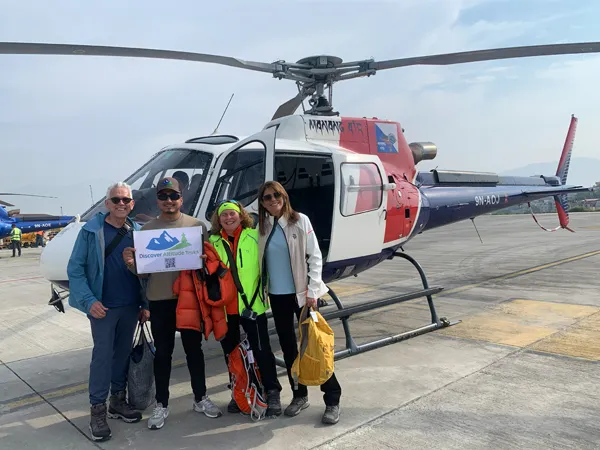
- Gorakhshep to Lukla Helicopter Flight: USD 2200 (maximum 2 persons) private way
- Gorakshep to Kathmandu Helicopter Flight: USD 1500 per person
- Horse ride per day (if you are unable to walk, this can be a perfect option to make a dream come true): $250 per day
Note: We believe in quality service, and our Everest Base Camp ( EBC) Trek cost reflects the value of a safe, well-organized, and lifetime memorable experience.
Everest Base Camp Trek Preparation
Everest Base Camp starts with a moderate to strenuous hike with frequent rest to acclimatize our bodies to the high altitude. The trek starts with the lowest altitude at LUKLA (2,840 meters) and takes us to the highest altitude of KALAPATTHAR (5,545 meters) and EVEREST BASE CAMP (5,364 meters).
Blessed with varied flora and fauna, the Everest region is regarded as the abode of the Sherpa community and is the dream of every trekker to reach the Base of Everest.
However, trekking to Everest Base Camp requires a high level of physical fitness, and preparation before the trek is highly recommended. Here are some of the must-do lists for travelers before the trek.
Physical Fitness: The Everest Base Camp Trek is considered a strenuous trek and requires a high level of physical fitness. Your trek will be through steep and rocky terrain in some parts, and you will need to hike several hours every day with a light backpack.
For this, you have to prepare yourself with regular cardio exercise, which can be through swimming, cycling, or running, which will help your leg muscles.
Apart from this, train yourself with a hike, carrying a backpack, before the trek.
Acclimatize with the altitude: Everest Base Camp Trek is a high-altitude trek leading you to the base of Mount Everest (5,364 meters). The highest point-to-step will be Everest Base Camp (5,364 meters) and /or Kalapatthar (5,545 meters).
Moreover, your highest point for an overnight stay will be Gorakshep (5,140 meters). This makes Everest Base Camp a high-altitude trek, and hence altitude sickness might be a serious problem for first-time trekkers. Thus, to avoid this, proper acclimatization during the trek makes the entire trek an easy hike.
Travel Insurance: It is highly recommended to have travel insurance covering high-altitude evacuation in the event of an emergency. Please read the policy of your insurance.
Trekking Documents: For the Everest Base Camp Trek, you will need three different permits, namely the Sagarmatha National Park Permit, Pasang Lhamnu Permit, and TIMS Card.
Trekking Gears and Equipment: You will need proper trekking clothes and trekking gear for your Everest Base Camp Trek. This mainly depends on the month of the year you are trekking.
However, a good pair of hiking boots, a warm jacket, a sleeping bag, a trekking pole, sunscreen, lip balm, sunglasses, etc., are basic to have.
Mentally be prepared: The Everest Base Camp Trek is challenging both physically and mentally. This trek requires effort and a certain level of flexibility and patience for long days of trekking, changes in weather conditions, accommodation, etc.
If trekkers follow all this guidance, their trek will be a flexible way to reach the base of the highest mountain.
We always recommend our clients consult a doctor before their high-altitude trek. This will help you to know about your physical condition and the possibility of trekking to Everest Base Camp. It is always good to carry your recommended basic medicine and first aid kit for any region where the possibility of hospitals and doctors is lacking.
Why Choose Discover Altitude Treks for Everest Base Camp Trek?
- Well equiped & licensed local trekking company based in Nepal
- 99% success rate
- Recognized by Tripadvisor with Travelers’ Choice Awards for 4 consecutive years (2023-2026)
- Expert Everest region Sherpa guides with years of field experience
- Small group and private trek options
- Flexible itinerary and personalized service
- Proper acclimatization plan for safety
- 24/7 support before and during the trek
- Easy booking & payment system (with our own safest payment gateway)
- Trusted by international trekkers with strong client reviews
- Easy customization for seniors, beginners, families, and private groups
Everest Base Camp Trek Distance- Lukla to Lukla

Trip cost varies by group size.
Everest Base Camp Trek Experience Review
Everest Base Camp Trek – 14 Days Itinerary
The following itinerary is one of the most followed for Everest Base Camp Trekking however, this itinerary is 100% customizable and can be tailored to suit your preferences, schedule, and travel requirements.
Day 1 Arrival in the Tribhuwan International Airport and Transfer to your respective hotel - 1350m (4430 Ft)
On our arrival at the international airport, our representative will pick you up and transfer you to your respective hotel, before checking in to the hotel a small briefing will be given by our staff on the day program.
Check in to the hotel and after refreshments, you can explore the famous touristic area of Kathmandu which is Thamel. overnight in Kathmandu.
Max Altitude: 1,400m (4,593ft)
Duration: Approx. 30 minutes
Accommodation: 3- Star Hotel
Mode of Transportation: Private Car
TIA
Day 2 Flight to Lukla 2,860m (9,383ft) and trek to Phakding - 2,610m (8,563ft)
From today our journey to the Everest Base Camp will be started, after having our breakfast we will drive to the airport for 10 minutes and start our 35-minute flight to one of the loveliest airports in the world between the Himalayas.
On arrival in Lukla, we will enjoy a couple of hours for the view and also acclimatize our bodies to the drastic change in altitude with regard to Kathmandu.
Now we will be heading ahead to our clear trail of the first day, enjoying beautiful scenic views.
The trail goes downhill, with the view of Kusum Kangaru(6367m/20889ft), and moreover on the way with a Buddhist monastery, a praying flag hanging, the praying wheel, farmland, teahouses on the way, etc can be seen.
Finally, we will be able to reach Phakding village, a small Sherpa village with enormous hospitality.
Overnight at our tea house.
Max Altitude: 2,610m (8,562ft)
Altitude Gain: Approx.1210 meters
Duration: Approx. 3 hours
Distance: Approx. 9 km
Meals: Full Board (BLD)
Accommodation: Tea house
Mode of Transportation: Flight
Day 3 Trek to Namche Bazaar - 3,440m (11,286ft)
Today will be a bit tough day for us as compared to the first day, so after our breakfast, we will be heading little downhill to cross the suspension bridge of Phakdin.
After crossing the bridge we will be heading uphill for almost 3 hours with stony steep before we reach a beautiful Monjo village on the top of the hill, this village is the entrance point of Sagarmatha National Park, we rest here for a short time period.
Further 4 hours trek before we reach Namche Bazaar, crossing the hills with beautiful views of Himalayas, crossing the Dudh Koshi river through long suspension bridge, we will be reaching Jorsale(2775m/9104ft) the last village before Namche Bazaar.
From Jorsale we will be heading uphill at a steady pace to reach Namche Bazaar, the capital of Sherpa, Namche Bazaar is the oldest inhabitant settlement of the Sherpa community.
This spot is now occupied with special hospitals, post office, ATM’s, banks, etc, a beautiful town on the Himalayas, further uphill there is an army camp to monitor and also to help trekkers and climbers in time of need.
On arrival in this beautiful town, we can enjoy our free time watching the first view of the gain Himalayas like Mt. Everest, Nuptse, Lhotse, etc.
Overnight at our tea house.
Max Altitude: 3,440m (11,286ft)
Altitude Gain: Approx. 830meters
Duration: Approx. 7 hours
Distance: Approx. 12 km
Meals: Full Board (BLD)
Accommodation: Tea house
Day 4 Acclimatization Day - Hike to Everest View Hotel - 3,880m (12,730ft)
Today will be our rest day to acclimatize our body before we head further up to our final destination.
Although it is a rest day by we need to make sure we are using the day according to the instruction of our trekking guide.
After our breakfast we will be heading to Everest View hotel, as a day excursion tour guided by our trekking guide, this will be some 3-4 hours to complete with the stunning views of Mt. Everest.
Then we will be descending downhill to Namche Bazaar, for the rest of our day, here we can enjoy our free time exploring this beautiful town and the people living around it.
Overnight at our tea house.
Max Altitude: 3,440m (11,286ft)
Altitude Gain: Approx. 440 meters
Duration: Approx. 3/4 hours
Distance: Approx. 13 km
Meals: Full Board (BLD)
Accommodation: Tea house
Day 5 Trek to Tengboche - 3,867m (12,687ft)
Today will be a bit easy day for us after a day of acclimatization, so after breakfast, we will start our trek uphill towards our destination.
After uphill we will be descending towards the Dudh Koshi river, crossing the river through suspension bridges, and then further for a couple of hours, we will be ascending uphill to somewhat a flat area.
All the way the views will be magnificent to watch with the massif Himalayas around, so there won’t be any question of feeling tiredness.
As we reach the Tengboche Monastery, the biggest in the Khumbu region, which is dedicated to Tibetan Buddhism, can be viewed surrounded by stunning mountains around; if we are interested we can meditate in the monastery enjoying the purity of the Himalayas.
Overnight at our tea house.
Max Altitude: 3,767m (12,358ft)
Altitude Gain: Approx. 327 meters
Duration: Approx. 6 hours
Distance: Approx. 12 km
Meals: Full Board (BLD)
Accommodation: Tea house
Day 6 Trek to Dingboche - 4,410m (14,469ft)
Early morning having breakfast beneath the mighty Himalayas will be the most exciting part of the trek, after refreshment views of the Himalayas we will be heading towards Dingboche.
Today we will be passing through pine and rhododendron trees before descending a bit to reach a small village Deboche(3710m/12171ft).
Crossing through the bridge we climb uphill passing through chortens, praying wheels, and yak grazing some grassy land before Dingboche.
Finally, we will be at our spot Dingboche, a small Sherpa village with tea houses and a magnificent view of Mt. Lhotse (8501m/27890ft).
Overnight at our tea house.
Max Altitude: 4,410m (14,468ft)
Altitude Gain: Approx. 643 meters
Duration: Approx. 5 hours
Distance: Approx. 12 km
Meals: Full Board (BLD)
Accommodation: Tea house
Day 7 Acclimatization day in Dingboche - Hike to Nangkartsang Hill - 5,091m (16,703ft)
Today will be another acclimatization day for us before we head further higher, as our body and mind should be prepared to ascend higher.
After having relaxing breakfast and beautiful views around, our guide will help us to take some excursion tour to the higher altitude.
For excursion we will have a couple of options, either to hike up to Nangkartsang Peak or to Chhukung Ri, as both are to the higher altitude guide will help us to decide which to hike.
Staying for a couple of hours with the magnificent views of the Himalayas, we will be descending downhill towards Dingboche. This hike will take us around 4 hours.
Overnight at our hotel.
Max Altitude: 4,410m (14,468ft)
Altitude Gain: Approx. 681 meters
Duration: Approx. 3/4 hours
Distance: Approx. 13 km
Meals: Full Board (BLD)
Accommodation: Tea house
Day 8 Trek to Lobuche - 4,910m (16,109ft)
Today we will feel more relaxed, as we had a rest day, so after having our breakfast we will be ascending uphill towards our next destination, but at a slow pace, because the layer of oxygen can be felt thinner today.
As the trek will be climbing uphill in the mountain, so with no green vegetation but with clear and clean views of the Himalayas we will be excited.
We cross a wooden bridge, passing through the Chorten, praying wheels, praying flag through rugged mountain trail filled with glacial moraine and bare landscape entering to the Khumbu valley.
With a clear view of Mt. Nuptse(7861m/25791ft), we will be reaching a small village with tea houses and lodges known as Lobuche.
Overnight at our tea house.
Max Altitude: 4,910m (16,108ft)
Altitude Gain: Approx. 500 m
Duration: Approx. 5 hours
Distance: Approx. 12 km
Meals: Full Board (BLD)
Accommodation: Tea house
Day 9 Trek to Gorekshep and detour to Everest Base Camp - 5,364m (17,598ft)
Today will be a long day for us, but with frequent rest, so after having our early breakfast, we will be heading uphill towards our final destination of the trek which is EBC.
After crossing a stream below Lobuche, we will be heading through the rock trail crossing the Meteorological and Earthquake station installed here to collect data and other information.
As the trail is clear with an open view and bare land, so we will be able to see Himalayan birds and other animals irrespective of mountains.
Finally, we will be at Gorakshep for our lunch, as this is our overnight spot as well, so after checking in to the lodge and having lunch, we further climb a couple of hours to Everest Base Camp before it’s too late to descend.
With energized lunch and fewer loads into our bag, we head towards EBC, viewing the Khumbu icefall, yaks, and expedition camps to the far distance will be another exciting view.
Taking photos and making some videos in the way we prefer to, as this will be the memory to be remembered forever and ever, we descend towards Gorakshep.
Overnight at our tea house.
Max Altitude: 5,164m (16,942ft)
Altitude Gain: Approx. 230 meters
Duration: Approx. 7/8 hours
Distance: Approx. 10 km
Meals: Full Board (BLD)
Accommodation: Tea house
Day 10 Optional hike to Kala-patthar 5,545m (18,192ft) and Descend Pheriche - 4,371 m (14,340 ft)
Today will be an early day for us, as we will be hiking to Kalapatthar for the ‘MAGNIFICENT’ view of the massif Himalayas which is never seen before experience.
We wake up early in the morning with the headlamp following the stony steep uphill towards our destination of Kalapatthar for the sunrise views from the top of the altitude we can be.
This will be a never seen experience for us, the majestic views of the mighty Himalayas just standing in front of us spreading its arm to welcome.
Moreover, the first rays of the sunlight falling upon Mt. Everest and the other Himalayas are a must-watch, our eyes will remain stunned by the view.
Taking pictures and some videos, we descend towards Gorakshep for our breakfast and head towards Pheriche with the views following us all the way.
Overnight at our tea house.
Max Altitude: 4,371m (14,340ft)
Altitude Loss: Approx. 793 meters
Duration: Approx. 7 hours
Distance: Approx. 18 km
Meals: Full Board (BLD)
Accommodation: Tea house
Day 11 Descend to Namche Bazaar - 3,440m (11,286ft)
After breakfast, we will be descending all the way downhill to Namche Bazaar, sharing our experience and story to the trekkers we meet on the way as they will be heading uphill.
With the views of the hilly green valley and Snowy Mountain behind, we descend at a nominal pace.
Finally back to Namche Bazaar, enjoying a hot shower at our lodge and free time visiting the capital town of the Sherpa people.
Overnight at our tea house.
Max Altitude: 3,440m (11,286ft)
Altitude Loss: Approx. 931 meters
Duration: Approx. 6 hours
Distance: Approx.22 km
Meals: Full Board (BLD)
Accommodation: Tea houe
Day 12 Trek to Lukla - 2,840m (9,318ft)
After breakfast, we slowly descend downhill pass all the spot which we had viewed while ascending on our first day.
Passing the Monjo village and re-crossing the Dudh Koshi River through the suspension bridge we reach Phakding village where we can have our lunch.
With the views of the farmland and villages all the way we will arrive at Lukla. This is the end of our day and a beautiful experienced to be remembered, so it’s a celebration day as well.
Today we can enjoy our evening in a grand way as we like sharing our experience with our team, shining and dancing will be another asset to remember to make our trip a memorable one.
We thank our Sherpa porter for their help and kindness and bid them farewell promising to meet someday.
Overnight at our tea house.
Max Altitude: 2,840m (9,317ft)
Altitude Loss: Approx. 600 meters
Duration: Approx. 7 hours
Distance: Approx. 21 km
Meals: Full Board (BLD)
Accommodation: Tea house
Day 13 Flight from Lukla to Kathmandu
After breakfast, we get ready for our domestic flight back to the capital city Kathmandu. On arrival in Kathmandu, we will be picked up by our private car to our respective hotel.
After check-in and refreshment, we have a free day to visit around Thamel and enjoy some Trekking Massage and visit the office of Discover Altitude to share our experience.
The evening will be a farewell dinner provided by our company Discover Altitude, accompanied by our staff.
Overnight at our hotel.
Max Altitude: 1,400m (4,593ft)
Altitude Loss: Approx. 1,490 meters
Duration: Approx. 45 minutes
Meals: Breakfast
Accommodation: 3-Star Hotel
Mode of Transportation: Flight
Day 14 Departure | Transfer to International Airport
Today is your last day in Nepal; one of the representatives from Discover Altitude will accompany you to the International Airport for your hotel according to flight schedule time.
We hope your stay in Nepal was an unforgettable moment with a beautiful memory and lovely experiences, last but not least we will be happy to see you in the near future for some other exciting journey in Nepal. As the journey ends we hope you are taking beautiful memories back home and lots of love from Nepal.
If you have some more free days in Nepal then our team of experts will help you by guiding some lovely places to visit in Nepal according to your available time schedule.
We wish you a safe and lovely flight back home.
Max Altitude: 1,400m (4,593ft)
Duration: Approx. 30 minutes
Meals: Breakfast
Mode of Transportation: Private Car
Are you still confuse from where to start?
No worries - Our Team is ready to guide you!
Route Map & Altitude Chart
Cost Details for the Everest Base Camp Trek – 14 Days
Includes
Airport Pickup and Drop-Off Service (Private)
- International Arrival Pickup
- Domestic Airport Drop on the Day of the Trek
- Domestic Airport Pick Up and transfer to your Hotel after the Trek
- International Airport Drop-Off on the Final Day
Private Heritage Tour
- Full-Day Kathmandu City Tour
- Government Registered English Speaking Tour Guide
- Private Car/Jeep/Van during the City Tour
Accommodation in Kathmandu and During the Trek
- 3-Night Star Hotel Accommodation in Kathmandu on BB Basis
- 11-Night Local Tea House/Lodge in the Mountain
- If you want to UPGRADE the standard of Hotel in Kathmandu, let us know.
Meals in Kathmandu and During the Trek
- 14 Breakfast: Local and Continental from the Menu
- 11 Lunch: Local and Continental (Veg/Non-Veg) from the Menu during the Trek
- 11 Dinner: Local and Continental (Veg/Non-Veg) from the Menu during the Trek
- 1 Farewell Dinner in Kathmandu after the Trek with a Cultural Program
Guide and Porter During the Trek and Our Liability
- Experienced Government-Registered Trekking Guide
- A strong, well equiped, experienced proter
- All Meals of Guide and Porter
- Insurance of Guide and Porter
- Allowance of Guide and Porter as per Government Rules
- First-Aid Medical Kit Carried by our Team
Trekking Permits
- Sagarmantha National Park Permits
- Pasang Lhamnu VDC Permits (Local)
- TIMS Permits
Domestic Flights
- Kathmandu to Lukla Flight Ticket
- Lukla to Kathmandu Flight Ticket
Our Supplementary Services for Trekkers
- Duffle Bag During the Trek
- Trekking Pole During the Trek
- Crampons
- Water Purification Tablet/Liquid
- Sleeping bag ( Can be arranged)
- Trip Achivement Certificate
- All Government Taxes and Service Charges
Excludes
- Entrance fees while visiting UNESCO World Heritage Sites during the Kathmandu City Tour.
- Bottle Mineral Water and Bar bills.
- Wi-Fi, hot showers, battery charging, and personal expenses.
- Gratitude to the Trekking Guide and Porter.
Add-ons
Customize your Everest Base Camp Trek with optional add-ons, including upgraded hotels, helicopter flights, and luxury mountain accommodations for greater comfort and convenience.
Kathmandu Sightseeing
US$85
per person
4-Star Hotel in Kathmandu
US$95
per night
5- Star Luxury Hotel
US$250
per night
The Dwarika's Kathmandu Hotel
US$550
per night
Helicopter Return ( Gorakshep to Kathmandu)
US$1350
per person
Dates & Availability
Select Departure Dates
Oct 2026
Nov 2026
Dec 2026
Jan 2027
Feb 2027
Mar 2027
Apr 2027
May 2027
Jun 2027
Jul 2027
Aug 2027
Sep 2027
Oct 2027
Nov 2027
Dec 2027
Start Date
End Date
Status
Price
We have everyday trip departure from Kathmandu for Everest Base Camp in a peak season (October - December & February - June). You can join any of your suitable date or you can request private trip if you are with group ( 2 or more), we are happy to arrange any of your private date.

Make it a private tour
Looking for a private tour, select your flexible date and trip of your interest, consult with our expert, and leave the rest to us to make a memorable experience.
Start HereKey Information & Guides
A few small but important tips to help you enjoy your Himalayan trek safely and comfortably.
Break in Your Hiking Shoes
Do not bring brand-new hiking shoes to the mountains. Wear and break them in for at least 2 weeks before your trek so your feet are comfortable and you can avoid blisters. Choose sturdy ankle-supporting boots with good grip for uneven and rocky trails.
Keep 2–3 Extra Days
For high-altitude treks, especially Everest Base Camp, we highly recommend keeping 2–3 extra days in your overall travel schedule. Mountain weather can change quickly and may affect flights, trekking plans, or road conditions.
Be Prepared for Helicopter Transfers
Flights to and from Lukla are highly dependent on weather. During periods of poor visibility or prolonged disruption, helicopter transfers may be required to keep your journey moving. Flexibility and patience are important.
Stay Flexible With Your Itinerary
Mountain travel can be unpredictable. Weather, trail conditions, landslides, or local circumstances may sometimes require changes to the planned route or trekking destination. Our experienced team will recommend the safest and most practical alternative when necessary.
Mountain Hotels Are Basic
Accommodation in the Himalayas is generally simple compared with city hotels. Teahouses and mountain lodges provide basic but comfortable rooms, usually with shared facilities at higher elevations. Hot showers, electricity, Wi-Fi, and other amenities may be limited or available at an additional cost.
Trust Your Guide & Enjoy the Journey
Conditions in the mountains can change quickly. Follow your guide’s advice, take your time, stay hydrated, and enjoy the incredible landscapes and local culture along the way.
Equipment List
For the Everest Base Camp Trek, proper clothing and trekking equipment are essential, as temperatures and weather conditions can change quickly with altitude. We recommend bringing good-quality, comfortable, and lightweight gear.
General
- Good-quality trekking boots
- Warm/down jacket and fleece layers
- Thermal base layers
- Waterproof and windproof jacket/trousers
- Warm hat, gloves, and sun hat
- Sunglasses with UV protection
- Sleeping bag suitable for high altitude
- Trekking poles
- Headlamp with spare batteries
- Water bottles or hydration system
- Sunscreen and lip balm
- Personal medication and basic first-aid items
- Backpack/daypack and duffel bag
Upper Body Layers
- Short-sleeved shirts/t-shirts
- Thermal layer/fleece (merino wool or synthetic)
- Warm wool sweater (optional)
- Down jacket
- Windproof/waterproof jacket and pants
- Rain poncho (optional during monsoon)
- Lightweight fleece gloves
- Waterproof insulated gloves
Lower Body Layers
- Trekking pants
- Synthetic insulated pants
- Lightweight hiking shorts
- Comfortable pants for lounging
- Trekking socks
- Thick wool socks
Footwear & Accessories
- Trekking boots (good ankle support and well broken-in)
- Camp shoes (Crocks, slipper, or lightweight sneakers)
- Gaiters (only useful in snow or muddy conditions)
- Duffel bag (60-80L waterproof duffel)
- Daypack (25-35L, comfortable waist belt, and rain cover)
- Dry bags (to store sleeping gear, electronics, used clothes, etc)
- Sleeping bag (-10°C to -20°C comfort rating)
- Sleeping bag liner
- Inflatable pillow (optional)
- Eye mask
- Ear plugs
- Trekking poles (highly recommended)
- Headlamp with extra batteries
- Water bottles (2 x 1 liter)
- Insulated bottle cover
- Hydration bladder (highly recommended)
- Water purification tablets or a portable water filter
Head & Sun Protection
- Warm beanie
- Sun hat or wide-brim hat
- Buff or neck gaiter
- Balaclava (winter recommended)
- Sunglasses (Category 3 or 4 UV protection)
- Lip balm with SPF
- Sunscreen SPF 50+ (carry ample sunscreen and reapply on every exposed body part to avoid tanning and sunburns) (Spray SPF is great for reapplication)
Personal & Medical Kits
- Toothbrush
- Toothpaste
- Dental floss
- Soap
- Shampoo
- Dry shampoo and hair oil (great for days you cannot wash your hair)
- Wet wipes
- Toilet paper
- Hand sanitizer
- Moisturizer and other skincare
- Nail clipper
- Small towel
- Razor (optional)
- Hairbrush
- Small mirror
- Feminine hygiene products (if required)
- Strepsils
- Eye Drops
- Altitude sickness medication (consult your doctor)
- Pain relievers
- Anti-diarrheal medicine
- Oral rehydration salts (ORS)
- Cold medicine
- Cough lozenges
- Band-aids
- Blister treatment (Compeed or moleskin)
- Medical tape
- Gauze
- Elastic bandage
- Antiseptic cream
- Tweezers
- Small scissors
Travel Documents
- Passport with at least six months of validity
- Passport-size photos
- International flight tickets
- Travel insurance documents
- Nepalese Rupees in small denominations
- Credit/debit card (limited acceptance in remote areas)
- Emergency cash reserve
- Nepal tourist visa
- Trekking permits (arranged by the company)
- Photocopies of the passport and visa
- Digital copies of important documents stored securely on your phone or cloud storage
Miscellaneous
- Garbage Bag
- Snacks (energy bar, trail mix, chocolate, nuts, dried fruits, protein bars, electrolyte tablets, instant coffee/tea bags, instant noodles, cookies, etc)
- Smartphone
- Camera
- Spare batteries
- Memory cards
- Power bank (20,000–30,000 mAh recommended)
- Charging cables
- Universal travel adapter
- Headphones
- Solar charger (optional)
- Kindle or book
- Journal and pen
- Playing cards
- Compression socks (highly recommended)
- Lightweight blanket
- Travel mug
- Emergency whistle
Useful Information
Everest Base Camp Hike in 2026-2027
Everest is a popular name for many, but trekking to the base camp is a dream. This was not an easy trail some decades ago; however, with the development of infrastructure, everything has changed, and the trail to Everest has shortened, allowing it to be accomplished in a relatively short period.
The Everest base camp trek, which used to be a 4-week trek, is now only a 9-day trek from Kathmandu to Kathmandu. This shortness of the trail has made Everest feasible to many, and now their dream is no longer a dream; it has become a reality and is achievable.
Till 2019 AD, every year around 28,000 trekkers used to hike to the Everest base camp but due to the global pandemic Covid-19, trekking to all the regions of Nepal was closed by the central and local government.
This restriction was in effect for almost 8-9 months, but now everything seems normal. Trekkers are allowed to trek to all the regions of Nepal, including Everest, without any restrictions.
Travelers coming to Nepal can now get an on-arrival visa without difficulty. You don't need to show proof of a 72-hour coronavirus-negative report or proof of COVID Vaccination.
The number of trekkers is increasing, and the trails are normal and open for trekkers. All the lodges and tea houses are open on the trail, and trekkers are welcome. The government has already vaccinated tourism workers and hotel staff, as their safety will help trekkers remain safe.
Nothing to worry about, it is normal now. Trekkers without any worries can now trek to the Everest base camp in 2026 and 2027 AD.
What to Expect During the Everest Base Camp Trek?
Food and Accommodation on the trail
Everest Trek is entirely a tea house trek, where you will be spending overnight at the local tea houses, also known as lodges. These are mainly operated by local Sherpa family members, which means you stay at home, far away from your home.
They are friendly members and always love welcoming travelers. Sherpa hospitality is popular worldwide for trekkers. They are very welcoming and will have an opportunity to understand their culture and customs.
Each room will have two beds with separate blankets, pillows, mattresses, and blank sheets. At the lower altitude, you can find an attached bathroom. However, as you ascend higher, this will be rare.
However, there will be western toilets on each floor, which can be used as a common toilet and a separate bathroom for showers.
Moreover, the foods are locally based on vegetables, and they are the perfect and well-trained chefs. Foods vary from Indian, Continental, Italian, Nepali, Tibetan, and many more. You will have multiple options to choose from a menu and are the best in the Himalayas.
Electricity and Internet during the EBC Trek
Although the Everest Base Camp Trek is one of the remote trekking trails in the Himalayas, the accessibility of electricity is available everywhere. At the lower altitude, you will be blessed with locally generated power from hydroelectricity, whereas at the higher altitude, tea houses and lodges have solar panels to generate electricity.
This helps trekkers to charge their mobile and camera upon payment of a certain sum of local currency.
For internet at the lower altitude tea houses and lodges will have Wi-Fi facilities, at the higher altitude, you can carry a data pack (SIM Card). This can be used till the base camp of Mount Everest.
So, nothing to worry about electricity and internet during the Everest Base Camp Trekking.
Lukla to Base Camp Trekking Trail
Upon landing at Lukla airport, your trek begins and ends stopping at the Lukla airport. This whole distance covers 130 Km/ 80 Miles. Trails are well maintained as compared to other routes of the Himalayas.
Due to the popularity of the Everest Base Camp Trek, every year thousands of trekkers visit the Everest region for trekking. This boosts local government to help maintain the trail regularly, and hence it can be considered as an easy-going uphill trek to the base camp of Mount Everest.
Everest Base Camp Weather and Temperature
The weather in the Himalayas is unpredictable. Due to climate change, the Himalayas experience unpredictable weather changes. Till Namche Bazaar you will experience rainfall very often. As you ascend higher above 3500M the possibility of raindrops declines.
However, during winter, there will be snowfall at higher altitudes, including Namche Bazaar. This will be very frequent during the night, so while hiking snowfall gets thinner and rarer.
Regarding temperature, during the daytime temperature will range between 5 to 10°C depending upon the altitude, and in winter it will go below -5 to -20°C.
Lukla flight route and Transportation
Lukla is the shortest gateway to the Everest Base Camp Trek. Every day, there are dozens of domestic flights from Kathmandu airport to Lukla (both ways).
However, during peak season, only one airport in Kathmandu gets very busy. This creates air traffic for international flights.
Thus, to reduce air traffic, the government in Nepal, during peak trekking season, diverts all the flights (both ways) to Manthali airport, which is a 4-hour drive from Kathmandu. Make sure you have arranged transportation to Manthali from Thamel. This drive will start at 2 am and will take 4 hours to reach Manthali airport.
Any changes that occurred were notified by the Minister of Aviation some 2 weeks prior. For confirmation, please contact your local travel partner Discover Altitude.
Health & Safety Related to Covid-19
Due to the global pandemic Covid-19, traveling in and around Nepal was restricted for more than a year. However, the government lifted the travel ban.
Now, after the vaccination mission throughout the country, the international border has been reopened for international travelers. Travelers entering Nepal DON'T need to show proof of COVID-19 vaccination or a 72-hour PCR Negative Test report at the port of entry while entering Nepal.
Everest Base Camp Trek Difficulty
Everest base camp trek starts from a moderate hike to a strenuous trek. The trek itself starts upon arriving at Lukla 2,840m ( 9,318ft.) Apart from these Everest Base Camp 5364m (17598 feet) and Kala Patthar 5,545m (18,192ft) will be our hiking places, where we will not stop for overnight.
It is an easy-going trek, where experience forehand is not required because trekkers will be hiking all through the well-maintained trail. The important point to be noted in the Everest Base Camp Trek is the altitude because we will be trekking at a high elevation where the level of oxygen will be lower than at normal altitude below 4,000 meters. As the elevation gets higher, we feel tired to hike uphill; to get rid of our tiredness we need to be physically fit.
Trekkers will be hiking all through the well-maintained trail with frequent stops for lunch, tea, coffee, etc. as there are restaurants on the trail apart from our overnight camp.
If trekkers want to spend an extra night for acclimatization or to make the trail shorter, then there are a sufficient number of lodges as well. The only thing is we need to make sure the distance covered in a single day and the altitude we are supposed to stay at overnight should be good enough for our body to acclimatize.
If all this instruction is followed, your age and locality of the nation will not be a burden to complete the Everest Base Camp Trek, only thing that matters is the physical and mental outcome with solid determination.
Best Time for Base Camp Everest Trek
Mainly, the Base Camp Trek is suitable for all seasons. That said, every trekking trail in Nepal has its best times to visit.
Trekking in Base Camp Everest is better during the months of September-November, which is Autumn, and March-May, which is Spring. This is so because of a better view of the high Himalayas with clear blue sky and better visibility as well.
Trekking to Everest Base Camp is also possible during winter, which is December and January, and the equipment required will be increased.
As the temperature in the high areas may go below -10 to -15. So warm clothes are highly recommended during winter.
But to speak the truth rainy season is not recommended for the Everest Base Camp trek, which is June and July. Below Namche Bazaar, normally we can experience rain during the rainy season, but the views up in the Himalayas may be cloudy, although it doesn’t rain over there.
Trekkers can be seen in the Everest Base Camp region throughout the year, but the best weather will be in Autumn and Spring, with less snowfall, varied vegetation, and high visibility.
Everest Base Camp Trek in May
Trekking to Everest base camp during May is one of the best times of the year, as this month is best both for trekkers and climbers. The weather stays clear, so you can get a clear picture of the mountains beside it, which have a warmer temperature, so you don’t have to deal with extremely cold weather.
During these months, you can also enjoy the beautiful rhododendron flower, which will amaze you with its different beautiful colors as well as you can see the tents at Everest base camp with climbers preparing to go up on Everest.
Why Choose a Local Company for Everest Base Camp Trek?
While traveling any part of the world, the first and foremost question that comes to any traveler is Can I trust a Local company? This is a normal question to any traveler and will always remain.
Now to clarify your doubt, the first thing we need to know about the local-based trekking company of Nepal is: In the context of Nepal, operating a trekking company is not an easy task.
The agency and the trekking staff member must be highly experienced and should go through all the legal procedures before applying to operate.
Further, members from the Nepal Tourism Board and Central Bank of Nepal, personally, according to their time but separately, visit the allocated destination to check the location of the company.
Then, they provide a letter for further processing, which normally takes a couple of months. As per the rules of the government, local companies operating trekking and tours in Nepal must deposit a certain sum of money, making sure that in times of need or any fraud attempt government can compensate the clients and impose a fine.
Further, every year, the local company needs to update its status, and every month they need to do the same with the Central Bank of Nepal, also known as Nepal Rastra Bank.
The government is very strict when it comes to travel and trekking agencies, and this is mainly to make sure travelers are safe enough while visiting Nepal.
We, Discover Altitude, are a team of highly professional groups engaged in the tourism sector of Nepal for more than 2 decades.
Our experience travels further than our content; our motto is to strengthen the local dwellers while traveling, and we focus on sustainable tourism to promote and maintain the nature and ecological diversity of the region we are trekking to.
Apart from all these, Discover Altitude, a local base trekking and tour company, provides multiple options for any travelers; we prefer safety while trekking with us.
Moreover, while choosing a locally based company, your effort to strengthen the local economy will be highly appreciated, and also it is cheaper in terms of money as the international company charges a hectic amount of money and further sells the travelers to a local company.
They earn only as the middleman. This is what we have experienced for the last 2 decades.
So it is always suggested to choose a locally based company with a highly experienced team, who are more familiar with the local lifestyle, language, culture, and religion, because they always have beautiful stories to tell you about the region you prefer to visit and Discover Altitude is one of them.
Everest Base Camp Trek Distance and Walking Hours
Everest Base Camp is a short-distance trek into the Himalayas from the hill. This will take us to the highest altitude of 5,545 meters (18,192 feet) at Kalapatthar and 5,364 meters (17,598 feet) at Everest Base Camp from Lukla, 2,840 meters(9317 feet). The trek to Everest Base Camp starts after landing at Lukla airport and ends at Lukla until we take a flight to Kathmandu.
This Everest Base Camp Trek covers a distance of 130 km approximately, starting from Lukla and ending in Lukla. Apart from this, the time to cover the entire trek is just a 9-days, this excludes 2- extra acclimatization days.
As the entire Everest trek is toward high altitude, trekkers cover 10-13 km per day to accomplish the Everest trek.
14-Day Everest Base Camp Trek Route
As we all know, how popular is Everest trek is for trekkers, climbers, and explorers. The popularity of the Everest region is a gift from Tenzing Norgay Sherpa and Sir Edmund Hillary when they first scaled Mt. Everest in 1953 AD.
That was the time when the Everest Base Camp trek was a 4-week-long trek to reach just the Base Camp of Mt. Everest, through the only trekking route via Jiri.
Now the time has changed, and the means of transportation too have shortened the entire Everest base camp trek to just 9-11 days from Kathmandu to Kathmandu. This shortness of the Everest trek is due to the construction of the domestic airport at Lukla, also known as the gateway to Mt. Everest.
There are two different trekking routes to the Everest Base Camp trek, one is via Jiri, a classical trek route to Everest, which was followed by Sir Edmund Hillary and Tenzing Norgay Sherpa in 1953 AD.
This trek route to Everest base camp takes 24-28 days to complete the entire trek to the base camp but can be shortened to a week if we take an alternative flight from Lukla to Kathmandu.
And the other popular trek route to Everest Base Camp, which is 9-11 days, is to take a 30-35-minute flight from Kathmandu to Lukla and vice versa. This short route to Everest is one of the most popular routes as well because it is less time-consuming and cheaper as compared to the classical Everest base camp route.
Everest Base Camp Trek Packages
Although there are two trekking routes to Everest Base Camp, the most popular one is to take a flight from Kathmandu to Lukla and hike further uphill towards the base camp, and follow the same or a different trail to descend back to Lukla and further take a flight to Kathmandu. Due to its remoteness and diverse landscape, reaching the Everest region is not an easy hike for many.
Keeping all this in mind, there are numerous trekking packages to reach Everest Base Camp. All these packages apply to any age group and gender, to experience hikers to laymen, etc.
Discover Altitude Treks has numerous Everest trekking packages that can be useful to any trekkers depending upon their physical level, age, time frame, budget, etc.
Some of the popular trekking packages are Everest Base Camp Trek-14 days, Everest Base Camp Trek 16-days, 9 days Everest Base Camp Trek, Everest Base Camp for Senior Citizens, Kalapatthar Trek, Everest Base Camp Trek via Gokyo and Chola-Pass, Best Everest Base Camp Panorama Trek, Everest Base Camp and Ama Dablam Base Camp Trek, Everest Three Pass Trek, Short Everest View Trek, and Everest Base Camp Helicopter Tour.
These are some of the best-selected packages for the Everest Base Camp trek; further trekkers can customize and can select their own tailor-made packages of interest.
Some information to know :
- Mount Everest is the highest mountain in the world, with an elevation of 8848.86 meters above sea level.
- Mount Everest lies in Nepal, it is also known as Sagarmatha, top of the world’ in the Nepali language, and ‘Chomolungma’, which means mother of the world’ in the Sherpa language.
- Mt. Everest was first scaled by Tenzing Norgay and Sir Edmund Hillary in the year 1953 AD.
- Mt. Everest lies in Sagarmatha National Conservation Area, which is a UNESCO natural world heritage site.
- Trekkers can only trek up to the base camp of Mt. Everest, which is 5,364 meters. At this elevation, we can observe the expedition group arranging for the summit to the top of Mt. Everest at 8,848.86 meters.
- Till the Base Camp of Mt. Everest, we can trek using a normal trekking permit, but to summit the top of Mt. Everest, we need a special permit and training.
- We can take a helicopter to and from Lukla airport via Kathmandu airport, but not the normal domestic flight.
- Normally, trekking to Everest Base Camp starts from Lukla and ends at Lukla, keeping in mind the total trekking distance to be covered is 130 km in 11 days, which includes two extra rest days for acclimatization, one in Namche Bazaar and the other in Dingboche
- Trekking elevation also varies from Lukla to Kalapatthar, as the trek starts from Lukla, which is 2,840 meters, and Kalapatthar, which is 5,545 meters; this will be the highest elevation in the entire trek to Everest Base Camp.
- The highest elevation for the overnight stay in the Everest Base Camp trek is Gorakshep, 5,140 meters, which is the final highest point to spend a night.
- The Everest Base Camp trek starts from a moderate hike to a strenuous hike, but two nights extra for acclimatization will help any trekkers to accomplish the entire trek.
- Throughout the hike to Everest Base Camp, accommodations range from an attached toilet to normal, it depending mainly on the altitude we are at. The higher the normal number of tea houses/lodges we are supposed to stay the higher we are the number of tea houses and lodges diminishes.
- The only living community in the Everest region is the Sherpa community. They are the aboriginals of the high Himalayas and follow Buddhism as their religion they are very friendly, loyal, and helpful.